Doctor of Philosophy Program in Architecture and Design
Degree Title
Doctor of Philosophy Program
in Architecture and Design
Doctor of Philosophy Program
Philosophy
Developing personnel and high-level research output in architecture and related design disciplines by generating new body of knowledge and sustainable design innovations to foster local creation and drive national development toward global standards.
Program Highlights
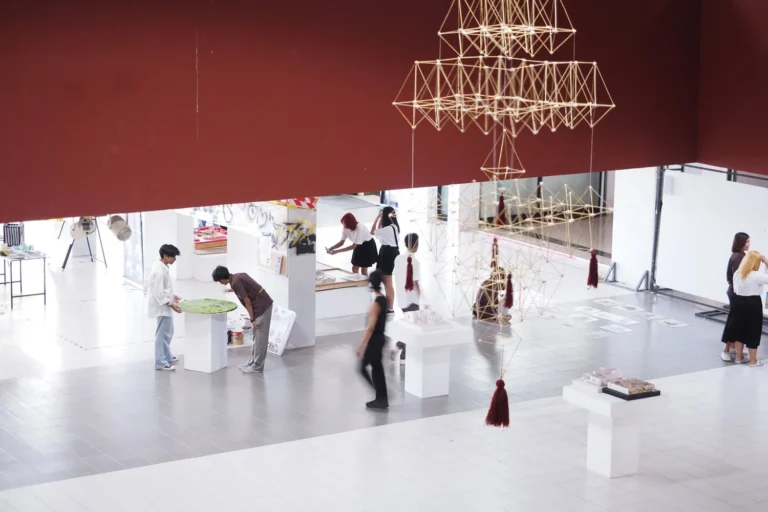
First Graduate Program in Southern Thailand: The premier graduate program in architecture and fine arts design in Southern Thailand, dedicated to producing scholars and design professionals in physical environment and creative arts who possess advanced research skills and interdisciplinary design integration capabilities.
Comprehensive & Expert Faculty: Taught by a team of faculty members with comprehensive expertise across all fields of architecture and design.
Advanced Research & Rich Cultural Heritage: A leading graduate program driving advanced research from local community challenges to global frontiers. Leveraging the unique ecological and cultural heritage—encompassing mountain, forest, rice field, and coastal contexts (“Khao, Pa, Na, Lay”)—alongside the state-of-the-art facilities of the university center.
Flexible Hybrid Learning & Efficient Completion: Features a hybrid learning approach (online and on-site) to enable lifelong learning, supported by continuous trimester research seminars to ensure completion within 2.5–3 years (for Master’s degree entrants) and 3.5–4 years (for Bachelor’s degree entrants).
Research Excellence & Global Vision: Driven to achieve research excellence for community and national development while promoting international research output aligned with the university’s strategy to become a world-class institution.
Program Learning Outcomes (PLOs)
The curriculum establishes Program Learning Outcomes (PLOs) aligned with national, institutional, and strategic policies to produce doctoral graduates capable of analytical, synthetic, and lifelong learning—grounded in the graduate identity of being “capable and ethical.” These outcomes respond to diverse stakeholder needs as detailed in Section 2, while fulfilling the program’s philosophy, objectives, and Higher Education Qualifications Standards. In compliance with the Higher Education Standards Committee Notification on Higher Education Qualifications Standards Learning Outcomes B.E. 2565 (2022), the learning outcomes encompass four key domains: Knowledge, Skills, Ethics, and Personal Attributes, and are developed based on Bloom’s Taxonomy as detailed below
- PLO1 : Learners are able to critically critique integrated theories and concepts in architecture and related fine arts design.
- PLO2 : Learners are able to select and apply appropriate research concepts, theories, and statistical methodologies to design research processes in architecture and related fine arts design.
- PLO3 : Learners are able to synthesize insights gained from academic studies and research to generate new bodies of knowledge or advance architectural and design concepts, serving as references or adaptable models in other contexts.
PLO4 : Learners possess skills to plan and execute research processes for architectural and design challenges, systematically connecting local and global contexts to physical environment design or creative art innovations.
PLO5 : Learners demonstrate proficiency in utilizing modern digital technologies to efficiently manage research and creative projects in architecture and design.
PLO6 : Learners possess high-level communication skills to convey research findings and creative insights in accordance with academic and professional standards, supported by formal academic presentation training.
PLO7 : Learners strictly adhere to research ethics, ensuring all research outputs undergo plagiarism detection, maintain proper academic citations, and respect intellectual property rights and personal freedoms.
PLO8 Learners are able to manage research or creative projects with discipline and responsibility, achieving successful outcomes according to planned objectives and schedules.
PLO9 Learners demonstrate academic leadership by addressing research or creative challenges that lead to new discoveries and knowledge generation, effective across individual practice, coordination, and team collaboration.
Program Structure
Program Structure
| Total Program Credits | Plan 1.1 ( 48 ) | Plan 1.2 ( 72 ) | Plan 2.1 ( 48 ) | Plan 2.2 ( 72 ) |
|---|---|---|---|---|
|
1) Compulsory Courses |
– |
– |
12 |
24 |
|
1.1 Core Courses |
– |
– |
9 |
9 |
|
1.2 Major Courses |
– |
– |
3 |
15 |
|
1.3 Seminar Courses |
6* |
6* |
6* |
6* |
|
2) Thesis Category |
48 |
72 |
36 |
48 |
|
3) Major Activity Category |
– |
– |
– |
– |
Note: Asterisk (*) indicates non-credit courses; however, a grade of “S” (Satisfactory) is required.
Plan 1: A research-intensive study plan focusing on a doctoral dissertation that generates new bodies of knowledge.
Plan 2: A study plan combining coursework with high-quality research and a dissertation that advances academic and professional standards.
Plan 1.1 & Plan 2.1: Designed for applicants holding a Master’s degree.
Plan 1.2 & Plan 2.2: Designed for applicants holding a Bachelor’s degree.
Career Opportunities
Architectural & Design Researchers and Innovators
Academic Faculty & Scholars in physical environment design and fine arts faculties across higher education institutions
Advanced Research-Led Architects & Designers driving professional practice in architecture and the arts
Tuition Fees
Tuition Fee Semester: 32,000 THB
Total Program Tuition Fee: 192,000 THB